 Kelly Cooper
A French-style wedding is less about replicating a list of customs and more about curating a mood: effortless elegance, long meals that invite conversation, music that lingers, and symbolism woven into small gestures. From town-hall vows to midnight sweets, each ritual tells a story of kinship and continuity. This guide gathers time-honored traditions you can borrow individually or blend into your own celebration, so that the day feels unmistakably yours while echoing the romance people associate with France. The goal is simple: create beauty that feels natural, generous, and deeply personal.
In France, marriage is first a civil act. Many couples marry at the mairie—the local town hall—before any religious or secular ceremony. You can capture that spirit by signing your license in a meaningful public setting, then hosting a more intimate service afterward. If you want to explore classic French bridal details—fabrics, veils, and the way a simple silhouette elevates every photograph—browse the french wedding veil for inspiration when shaping the look and pacing of your day. Think structure first, then romance.
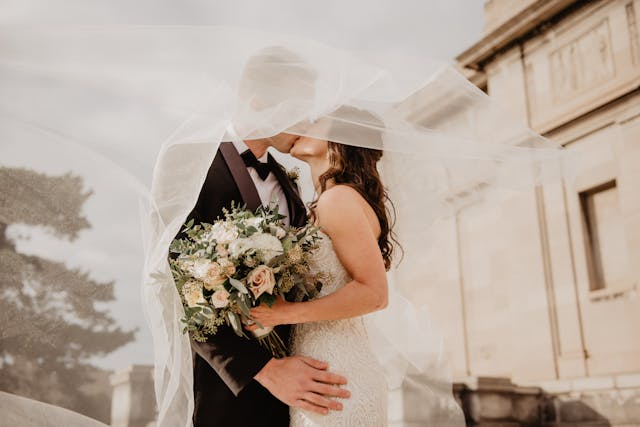 Flowers, in the French imagination, are a vocabulary rather than an exclamation point. Bouquets tend to be airy and intentional: garden roses set loose with herbs, blossom branches that reach outward, a few stems of lily-of-the-valley in spring. Place settings follow the same logic—linen that drapes, candles at mismatched heights, cutlery with a quiet patina. Restraint is the secret to opulence; when every element breathes, the room reads as refined instead of busy. Consider a palette that whispers—ivory, sand, slate, and soft greens—then let light do the rest.
One of the most beloved French customs is the cortège, a processional that gives family and closest friends a part in the ceremony. Parents pair with each other, children carry rings or petals, and witnesses—temoins—stand near the couple to sign and to support. Recreate this by asking siblings or lifelong companions to walk with you, or to offer short readings drawn from poetry and letters. When people participate, they remember; the ritual becomes collective memory rather than something watched from a distance.
At the reception, the order of service moves unhurriedly. Champagne opens the festivities, often on a terrace or in a garden where guests mingle before dinner. Small bites—gougères, oysters, savory tarts—circulate on trays. Live musicians or a jazz playlist set a gentle tempo. A seating chart greets everyone near the entrance, and place cards appear at the table. If you love the idea of conviviality without chaos, adopt the vin d’honneur: a longer cocktail hour that welcomes neighbors, colleagues, or extended community before a more intimate seated meal that follows.
Long tables describe the French dining landscape: wood or linen-covered, dotted with low arrangements and taper candles. The meal itself often unfolds in three or four acts. A cold starter might give way to a warm course; the plat—roasted chicken with morels, cod with beurre blanc, or seasonal vegetables in puff pastry—arrives next. Salad appears after the main dish, cleansing the palate before the cheese course. Cheese is not an accessory; it is a chapter, accompanied by good bread and a conversation about texture and terroir. Dessert typically arrives later, which leaves time for toasts between courses.
Speaking of toasts, French speeches tend to be short, witty, and carefully placed. Invite two or three voices rather than many, and coach them to share one vivid anecdote each. Between remarks, your maître d’hôtel or planner can cue music and oversee service so that the rhythm never stalls. Consider the tradition of the pièce montée, a tower of crisp choux pastries filled with cream and lightly caramelized on the outside. When rolled in to applause, it announces the sweet portion of the night with theater and delight.
Fashion helps narrate the day. French brides often favor a gown with clean lines, luxurious fabric, and one striking detail—covered buttons, a deep back, or a delicate sleeve. The veil, when worn, frames the silhouette without overpowering it. Grooms lean toward tailored suits in navy or charcoal, often with a boutonnière that mirrors the bridal bouquet. Elegance, not extravagance, is the measure; the clothing should allow movement, laughter, and dancing long after midnight. For attendants, coordinated tones rather than identical outfits keep the harmony while respecting individual style.
Another custom to borrow is the dragees—sugar-coated almonds presented in small boxes or pouches. Traditionally five in number, they symbolize health, wealth, happiness, fertility, and longevity. Modern couples reinterpret the idea with candied citrus peels, pralines, or tiny jars of honey from a local producer. Place these favors at each setting, or arrange them on a sideboard near the exit so guests encounter a sweet memory on their way home. Small gifts that carry a story become keepsakes rather than clutter.
Dancing begins after dinner, yet the transition is carefully staged. A first dance opens the floor; a parent dance might follow; then an upbeat set invites everyone. For a French mood, think accordion or Django Reinhardt for cocktail hour, then classics that span generations for the party proper. Around midnight, the late-night tradition of onion soup—soupe à l’oignon—revives the crowd. Served steaming in bowls or cups, it’s humble and perfect, the kind of culinary wink guests talk about the next day.
If your celebration includes children, consider the French practice of entrusting them with a tiny quest. A flower crown to deliver, a ribbon to hold during the processional, a book of drawings to present as a gift. These tasks give structure and pride, and they photograph beautifully. For elders, create a quiet corner with comfortable chairs and softer music—respect for every generation is a hallmark of French hospitality. When everyone feels seen, the party acquires grace.
Ideas for décor often arise from architecture. In a château or country inn, you might lean into natural stone, original beams, and antique mirrors. In a modern loft, play with light and negative space: clear glass, linen drape, sculptural branches. Bring the garden indoors—potted olive trees, lavender in clay pots, trailing jasmine on iron stands. Layer with textiles that invite touch: washed-linen napkins, embroidered handkerchiefs, velvet ribbon on menus. The effect should be tactile, intimate, and grounded in place rather than overly thematic.
French stationery tells its own story. The invitation suite often includes a small card for practical details—accommodations, transport, dress code—and a map hand-illustrated with landmarks. Programs are concise; menus are treasures guests slip into pockets. Wax seals, deckle edges, and letterpress add texture without shouting. Seating cards might double as escort cards with a sprig of rosemary or a wax-stamped tag tied to the stem of a glass. Paper becomes a souvenir of the senses—what guests held, noticed, and carried home.
During the meal, you can borrow the tradition of chansons or games led by friends—gentle, affectionate roasts punctuated by songs. Keep these interludes brief and tasteful, letting the food remain central. To encourage easy conversation, place bottles of still and sparkling water alongside wine and serve family-style breads. A small knife rests atop the cheese board for guests to help themselves, and a server revisits tables with carafes rather than interrupting each story. The idea is to remove friction so that time expands.
As night deepens, step outside for five quiet minutes with your photographer. In France, couples often sneak away for portraits in the blue hour when buildings glow and the sky turns cobalt. Those images—soft, cinematic, unhurried—counterbalance the laughter and movement of the reception gallery. Return to the dance floor through a tunnel of sparklers or candlelight if your venue allows; safety always comes first, but the effect is magical and never kitsch when handled with care.
Sustainability belongs in a French-inspired celebration. Rent rather than buy where you can; choose seasonal flowers grown nearby; feature wines from a region with a story you can tell. Consider a menu that respects the farmers and the season: asparagus in spring, tomatoes and peaches in late summer, mushrooms and celeriac in autumn. Give leftovers a second life by partnering with a local charity or arranging for staff to take home sealed portions. Elegance and ethics are not opposites—they flourish together.
For couples planning a multi-day experience, borrow the structure of a French weekend. A welcome apéritif on the first evening with simple bites sets the tone; the wedding day itself unfolds leisurely; a brunch the next morning closes the circle with pastries, fruit, and a savory tart. Encourage guests to explore the surroundings with a list of cafés, markets, and gardens; if the venue sits in wine country, arrange a short tasting. The more your guests feel part of a shared journey, the more they will carry the memory as their own.
Above all, remember that tradition in France is living, not rigid. Keep what speaks to you and reinterpret the rest. A civil signing followed by vows under plane trees; a champagne hour that stretches as the sun lowers; a cheese course that sparks conversations between strangers; a tower of choux arriving to cheers; onion soup at midnight while the band leans into one more swing standard. When your celebration breathes with intention and warmth, it will feel unmistakably French—even if it happens far from France.